

Sensory play is more than just fun. It plays a big part in how children learn and grow. From touching different textures to hearing new sounds, sensory play gives children the chance to explore the world with their senses. This kind of play helps children build skills they will use for the rest of their lives. In this article, we’ll look at what sensory play is, why it matters, and how parents and teachers can use it to help children grow.
What Is Sensory Play?
Sensory play is any activity that lets children use their senses—sight, sound, touch, taste, and smell. It includes things like:
-
Playing with sand or water
-
Squeezing playdough
-
Listening to music or nature sounds
-
Smelling different spices or flowers
-
Exploring textures like smooth stones or soft fabric
These activities help the brain grow by building connections that support learning and development.
Why Sensory Play Is So Important
Boosts Brain Development
Sensory play helps the brain build strong pathways. When children touch, smell, hear, or see something new, their brains learn how to react. These reactions help with problem-solving, memory, and thinking skills. Over time, sensory play helps children become better learners.
Improves Fine and Gross Motor Skills
Many sensory activities help children use their muscles. When they scoop rice, pour water, or squeeze clay, they build fine motor skills, which are needed for writing and cutting. Activities like jumping on a trampoline or crawling through a tunnel help with gross motor skills. These movements make the body stronger and improve coordination.
Supports Language Development
As children explore new textures, smells, or sounds, they often want to describe them. They might say, “This is squishy,” or “It smells sweet.” Sensory play gives them new words to use. When adults talk to children during play, it also helps grow their vocabulary and understanding of language.
Encourages Curiosity and Imagination
Sensory play invites children to ask questions and explore. “What happens if I mix these colors?” or “What does this sound like?” They become little scientists, testing and learning. This kind of play sparks creativity and helps children think outside the box.
Helps with Emotional Regulation
Sometimes children feel overwhelmed by their emotions. Sensory play can help calm them down. Playing with sand or listening to soft music can soothe a child who feels stressed. It also helps children learn how to manage their emotions and respond in healthy ways.
Supports Social Skills
When children play with others, they learn to share, take turns, and work together. Sensory play is a great way to build these skills. Activities like group painting or building with blocks help children practice teamwork and communication.
Easy Sensory Play Ideas to Try at Home or School
You don’t need fancy toys to start sensory play. Here are some simple and safe ideas:
-
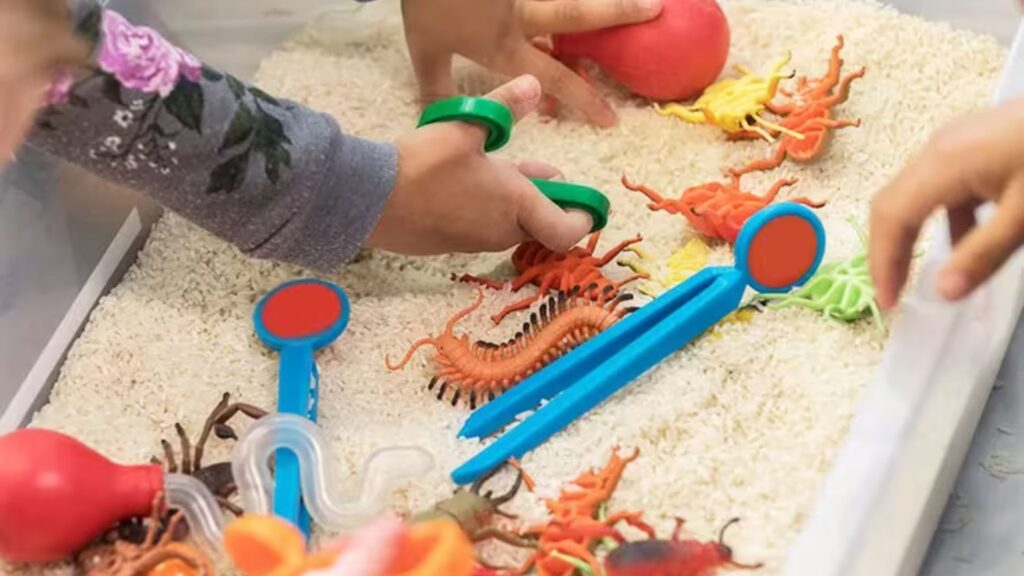
Rice or Pasta Bins: Fill a tub with dry rice or pasta. Add cups, spoons, or toys for digging.
-
Water Play: Use a bucket of water with sponges, cups, and toy boats.
-
Playdough or Clay: Let kids squeeze, roll, and shape.
-
Sound Bottles: Fill plastic bottles with beads, bells, or buttons. Let children shake them and guess the sounds.
-
Scented Items: Offer items like cinnamon sticks, vanilla, or citrus peels to smell.
-
Texture Walk: Lay down different materials (like bubble wrap, towels, foil) and let kids walk on them barefoot.
Tips for Safe and Fun Sensory Play
-
Always supervise children, especially during messy or water-based play.
-
Keep activities age-appropriate. Avoid small items that could be a choking hazard.
-
Let children lead. Follow their interests and let them explore in their own way.
-
Use open-ended materials. Items that don’t have one “right” use (like blocks or sand) are best for learning.
Final Thoughts
Sensory play is a powerful tool for learning and growth. It helps children develop in so many areas—mental, physical, emotional, and social. By giving kids time and space to explore through their senses, we help them build a strong foundation for future learning.
Whether at home or in the classroom, sensory play can make a big difference. And the best part? It’s fun!