

Messy play is fun, exciting, and full of learning for toddlers. It helps them explore the world using their senses, build fine motor skills, and spark creativity. But let’s face it—messy play can also leave your home looking like a disaster zone. The good news is, with a few smart strategies, you can manage messy play without the stress. This article will show you how to keep the mess under control while still giving your toddler all the benefits of hands-on play.
Why Messy Play Is Important
Before we talk about how to manage the mess, let’s look at why it’s worth it.
Messy play helps toddlers:
-
Explore textures like slime, paint, mud, or foam.
-
Develop fine motor skills by pouring, scooping, squeezing, and stirring.
-
Boost creativity by mixing colors and materials.
-
Practice problem-solving and decision-making during open-ended play.
-
Calm their bodies through sensory input, which helps with emotional regulation.
In short, messy play is more than just fun—it’s a key part of learning.
Common Messy Play Activities
Messy play doesn’t always mean chaos. Common messy activities include:
-
Finger painting
-
Water play
-
Shaving cream or foam play
-
Playdough or slime
-
Sand or dirt play
-
Cooking or baking play (with flour, dough, etc.)
-
Sensory bins with rice, oats, or beans
These activities offer rich learning, but they do require cleanup. Here’s how to manage it.
How to Prepare for Messy Play
Choose the Right Space
Pick a play area that’s easy to clean. A kitchen floor, outdoor patio, or bathtub works well. You can also use a plastic mat, picnic blanket, or shower curtain as a base.
If you’re inside, avoid carpeted rooms or near upholstered furniture.
Dress for the Mess
Put your toddler in old clothes or a smock. You can also let them play in just a diaper if the space is warm enough. Keep a clean towel nearby for quick wipe-ups.
For yourself, wear clothes you don’t mind getting stained too!
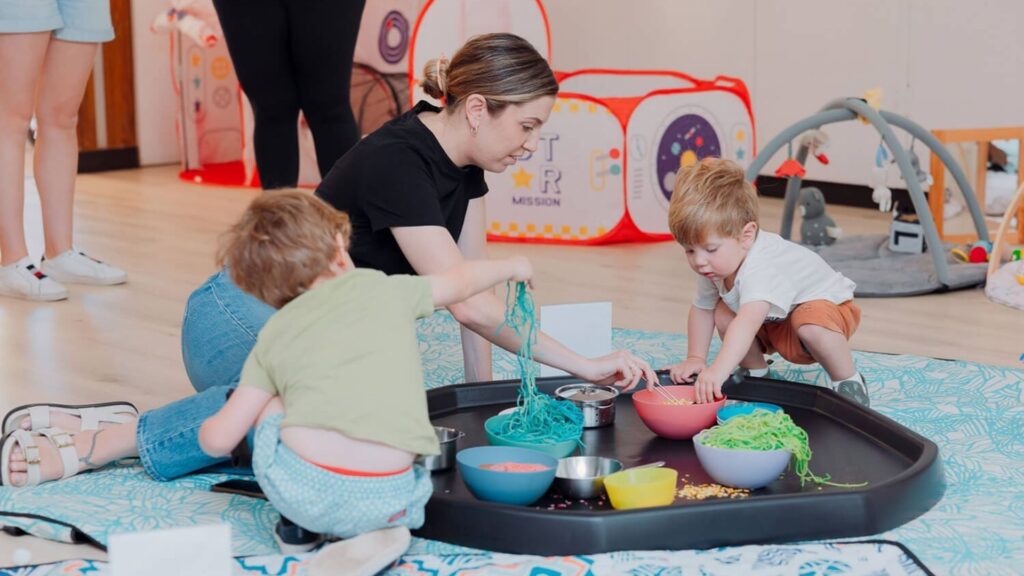
Use Play Trays or Containers
Limit the mess by using:
-
Sensory bins
-
Deep baking trays
-
Large plastic tubs
Keeping materials inside a bin helps toddlers stay focused and keeps spills in one area.
Set Clear Boundaries
Explain simple rules to your toddler, such as:
-
“Keep the paint on the paper.”
-
“We pour the rice inside the bin.”
-
“Hands stay at the table.”
Repeat gently and often. Toddlers need reminders, but they’ll learn what’s okay.
During Play: Keep It Controlled
-
Supervise closely to guide behavior and prevent wild messes.
-
Join in—when you play alongside them, they’re more likely to stay on track.
-
Keep wipes or damp cloths nearby for quick cleaning of hands, faces, or surfaces.
If your toddler starts throwing materials or getting too wild, calmly pause the activity and reset expectations. Sometimes a short break is helpful.
After Play: Easy Clean-Up Tips
-
Have your toddler help with clean-up in simple ways: putting tools in a bin or wiping the table with a sponge.
-
Use a handheld vacuum or broom for dry materials.
-
Place dirty clothes and towels directly into a laundry basket.
-
If needed, transition straight to bath time—it’s part of the fun!
Creating a Routine for Messy Play
Messy play doesn’t need to happen every day. Try setting up a weekly routine (like “Messy Mondays”) or limit it to certain times when you have the energy and space to manage it.
Keeping it predictable helps toddlers look forward to it—and helps you feel more in control.
Final Thoughts
Messy play is worth the effort. It gives toddlers a powerful way to learn, express themselves, and explore new things. By preparing ahead and setting simple limits, you can keep the mess manageable and the experience enjoyable for both you and your child.
So go ahead—scoop the rice, squish the paint, or splash in the tub. Messy play doesn’t have to be stressful. With the right tools and mindset, it can be one of the best parts of your toddler’s day.