
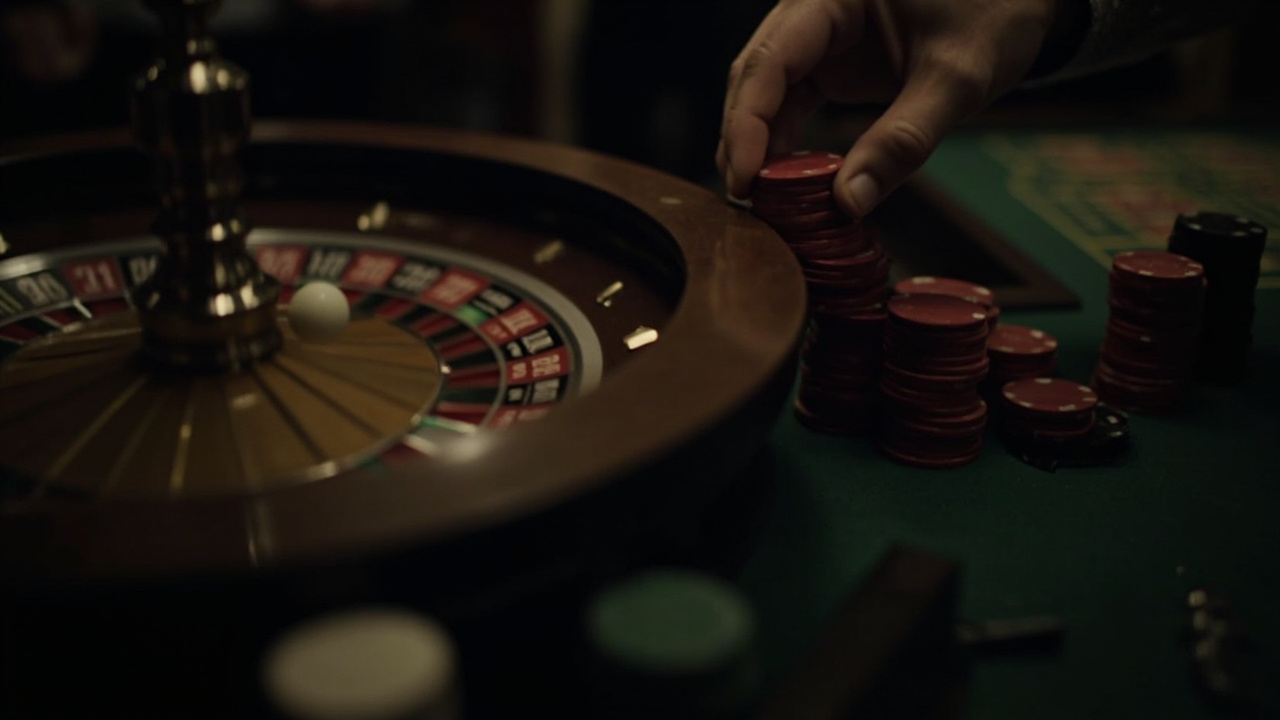
A roulette wheel is an elegant piece of probability engineering, and every betting system is really an interface question dressed as a maths one. After years of building slot maths models and running live-dealer pipelines from Brisbane to Manila, I’ve watched countless players – at Townsville pubs and Brisbane high-roller rooms alike – pick a system based on folklore rather than how the table actually feels under the thumb. This piece looks at how to win at roulette betting system choices through a usability lens, with honest verdicts for the Australian punter.
The Spin, the Mathematician, and the System

Roulette is often credited to the French physicist Blaise Pascal, who stumbled on an early version while chasing a perpetual motion machine in the 17th century. Every system since – Martingale, Fibonacci, Labouchère, D’Alembert – rearranges the same brutal fact: each spin is independent, and the European single-zero edge sits at 2.7%. For an Aussie in AUD, that’s roughly $2.70 per $100 wagered, every arvo.
What a system really changes is the shape of your losing run, not the probability underneath. A flat-staking grinder loses slowly; a Martingale chaser loses rarely and catastrophically. From the slot-maths side, I can tell you variance shaping is exactly what we do when tuning a reel game, and the player’s emotional profile matters more than the equation on the page. Players keen to test a progression without burning a bankroll can rehearse in demo mode at https://royalreelsfree10.com/ and feel out the cadence before risking anything meaningful.
Running a basic progression:
- Set a hard AUD bankroll before sitting down, say $200.
- Place the minimum outside bet (red/black, odd/even) on the first spin.
- After a loss, raise the stake one unit; after a win, drop back to the minimum.
- After three losses, stop and reassess, regardless of where the system says you should be.
Interface and Navigation: Betting at Speed
A betting system lives or dies on the betting layout, and a clunky interface punishes you before the wheel spins. The best screens I’ve shipped with our European studio partners put the chip selector, the rebet button, and the double-zero toggle in thumb-reach on a 6.1-inch handset. Worse builds bury inside bets under modals, force a confirmation pop-up after every chip placement, and hide the table limits until you’re mid-progression.
For a system player, the critical UI moments are: changing stake size mid-sequence, rebetting the previous layout in one tap, and seeing the last ten spins without leaving the grid. Australian-facing products that localise stake increments to 50c, $1, $2, $5, $10 save you from mental conversion while a Martingale is mid-flight. Navigation should be flat: one screen, one grid, one spin button, zero mystery.
Search is the other tell. If you can’t type “European roulette” into the lobby and land on a single-zero table in under three seconds, the product isn’t built for system players. From shipping slot UIs across three continents, I can tell you the studios that invest in search taxonomy are the same ones that nail the betting-grid ergonomics, because both come from the same obsession with the player’s first ten seconds on screen.
Localisation, Currency, and the Mobile Round
Localisation is where most “international” roulette products fall over for Aussie players, and where the smart ones quietly win. A product that loads in en-AU, shows the minimum in AUD, and surfaces the dealer on the home screen signals it actually thought about you – and from running live-dealer pipelines out of Brisbane and Manila, I can tell you that signal alone shifts first-deposit conversion measurably.
Currency is the second call. A betting system player needs round AUD figures because a Martingale is hard enough to track without a 0.8731 AUD chip clouding the maths. The cleanest Australian-facing products settle every transaction in dollars, convert deposits at the cashier rather than at the table, and surface the live exchange margin where you can see it. Anything else is a quiet tax on your concentration.
Mobile is the third leg, and for most Australians it’s the only leg. A sub-3-second load on 4G in Townsville or Cairns, a portrait-mode grid that doesn’t shrink inside bets, and a portrait/landscape toggle that survives an incoming call are table stakes. For anyone who prefers to grind a progression from the couch on a Sunday arvo, the Stellar Spins coverage outlines a comparable live-dealer setup built for the same brief.
Player Fit and the Honest Verdict
A betting system isn’t a magic trick, and after shipping live-dealer content across Europe and APAC, the honest verdict is this: the system that survives a session matches your temperament, and the platform that survives a session is the one whose interface never breaks your flow. For Australian players on a European single-zero table, it’s more about stake-button ergonomics and AUD-native chip sizes than which Fibonacci variation you choose.
Where the maths and UI line up, the experience is strong. Blake Murphy, Head of Live Casino at Coral Coast Interactive, says “Players who use a progression don’t need a faster wheel – they need fewer clicks between decisions, and that’s the part most studios get backwards.” A payout in AUD inside two hours, with a visible exchange margin, does more for a system player than a flashy welcome offer.
Lachlan Martin, Customer Experience Lead at Ironbark Compliance Advisory, reckons “the smarter operators are now surfacing responsible-gambling tools – deposit caps, reality checks, loss timers – directly inside the betting grid, because that’s where the system player actually lives.” Player fit is narrow: a flat-stake system on a localised mobile-first product will suit a $200-arvo punter, but a Martingale chase will defeat any interface in the world.
So next time a mate reckons they’ve cracked roulette over a beer, ask which Fibonacci they run and how many clicks it takes to rebet. The honest answer, more often than not, is that the system is defo the smallest variable in the room. The thumb on the chip selector, the AUD chip on the felt, the cashier that pays before midnight – that’s where the session is won or lost, and Pascal’s wheel keeps spinning long after the maths has spoken.